Black White Butterfly Moth Vector Guide
In the world of digital design, clarity and versatility are often more valuable than complexity. Whether you are a small business owner creating packaging, a marketer designing social media graphics, or an educator preparing classroom materials, the need for high-quality, scalable imagery is constant. This is where a Black White Butterfly Moth Vector becomes an indispensable asset. Unlike raster images that pixelate when resized, vector graphics maintain their crisp edges at any dimension, making them ideal for both tiny icons and large-format prints.
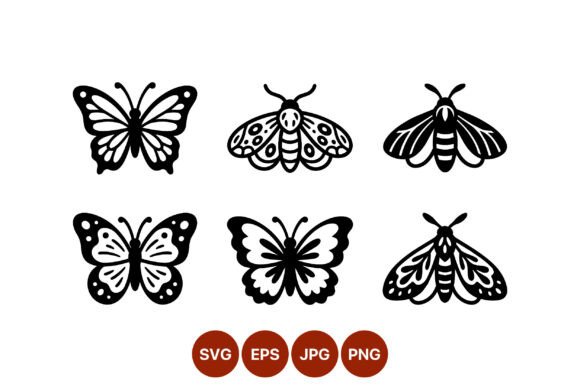
The specific collection featuring six black and white vector insects offers a unique blend of artistic elegance and technical utility. These designs showcase butterfly and moth shapes with decorative wing patterns rendered in a clean line art style against a white background. By focusing on high-contrast monochrome aesthetics, this artwork solves common design challenges related to printing costs, brand consistency, and visual hierarchy.
Why Line Art Insects Enhance Brand Identity
Visual identity relies heavily on consistency. When you incorporate a Black White Butterfly Moth Vector into your brand assets, you gain a flexible element that adapts seamlessly to various mediums. The line art style is particularly effective because it conveys sophistication without overwhelming the viewer. For entrepreneurs and marketers, this means you can use these insect motifs on business cards, letterheads, and website headers without clashing with other design elements.
Consider the practical application for a boutique skincare brand or an organic tea company. Nature-inspired imagery is prevalent in these industries, but full-color illustrations can sometimes appear cluttered or expensive to print. Using high-contrast black and white vectors allows for single-color printing, which significantly reduces production costs while maintaining a premium look. The decorative wing patterns add a touch of intricacy that suggests attention to detail, reinforcing the perceived quality of the product.
Technical Advantages of Multi-Format Downloads
One of the most significant hurdles for non-designers is file compatibility. A robust digital asset must work across different platforms and software. This particular set addresses that need by including a ZIP folder with SVG, PNG, JPG, and EPS files. Understanding how to leverage each format can save you considerable time and frustration.
- SVG (Scalable Vector Graphics): Ideal for web use. These files are code-based, meaning they load quickly and remain sharp on retina displays. Use these for your website icons, blog post headers, or digital newsletters.
- EPS (Encapsulated PostScript): The standard for professional printing. If you are sending files to a commercial printer for brochures or packaging, EPS ensures that the lines remain smooth and editable in programs like Adobe Illustrator.
- PNG (Portable Network Graphics): Perfect for digital presentations and social media. The transparent background capability allows you to layer the insect designs over photos or colored backgrounds without a white box appearing around them.
- JPG (Joint Photographic Experts Group): Useful for quick previews or platforms that do not support transparency. While less flexible than PNG, it is universally compatible.
Having access to all these formats means you do not need to convert files yourself, a process that often results in quality loss. This immediacy supports efficiency, allowing creators to focus on composition rather than technical troubleshooting.
Creative Applications for Educators and Publishers
Beyond commercial branding, these vector insects serve educational and publishing purposes effectively. Educators often require clear, distinct illustrations for biology lessons, worksheets, or classroom decorations. The high-contrast nature of the Black White Butterfly Moth Vector makes it excellent for black-and-white photocopying, ensuring that handouts remain legible and visually appealing even when printed on standard office equipment.
For publishers and bloggers, line art provides a neutral aesthetic that complements text rather than competing with it. When writing articles about nature, conservation, or metamorphosis, inserting these decorative wing patterns can break up long blocks of text and guide the reader’s eye. Because the artwork is 100% vector-based, you can resize a small moth icon to fit between paragraphs or enlarge a butterfly to serve as a chapter header without any loss in resolution.
Simplifying Design Decisions with High-Contrast Art
Design paralysis is a common issue for freelancers and hobbyists who lack formal training. Choosing colors, balancing saturation, and ensuring accessibility can be daunting. By utilizing pre-designed black and white vectors, you eliminate the guesswork associated with color theory. The high-contrast scheme ensures readability and visual impact by default.
This approach is particularly beneficial for users who need to create materials quickly. For instance, a community organizer putting together a flyer for a garden club event can drop these insect vectors into a template and achieve a polished look instantly. The decorative patterns provide enough visual interest to make the design feel custom-made, while the monochrome palette ensures it remains professional and cohesive.
Considerations for Optimal Use
While vector graphics offer numerous advantages, it is important to understand their limitations to use them effectively. Line art relies on negative space and clear strokes. If you plan to place these vectors over busy photographic backgrounds, ensure there is sufficient contrast. You may need to add a solid shape behind the vector or adjust the opacity of the background image to keep the insect shapes distinct.
Additionally, while the files are editable, modifying complex decorative patterns requires vector editing software. If you are using basic tools, stick to resizing and recoloring the entire object rather than attempting to alter individual lines within the wing patterns. This preserves the integrity of the original design and prevents awkward distortions.
Supporting Sustainability Through Digital Efficiency
In an era where digital footprint matters, using efficient assets contributes to broader sustainability goals. Vector files are typically smaller in size compared to high-resolution raster images, which reduces server load and energy consumption during data transfer. For web developers and bloggers, optimizing site speed is crucial for user experience and SEO rankings. Integrating lightweight SVGs from this Black White Butterfly Moth Vector collection helps maintain fast loading times without sacrificing visual quality.
Furthermore, the versatility of these files reduces waste in physical production. By testing designs digitally with scalable vectors before committing to print, businesses can avoid costly errors. The ability to preview exactly how the line art will appear at different sizes ensures that the final printed product meets expectations, minimizing reprints and material waste.
Final Thoughts on Integrating Vector Assets
The value of a well-curated digital asset library cannot be overstated. A Black White Butterfly Moth Vector set is more than just a collection of images; it is a toolkit for clearer communication and more efficient creation. By offering multiple file formats and a timeless aesthetic, these resources empower professionals and hobbyists alike to produce high-quality work with less effort.
Whether you are refining a brand’s visual language, enhancing educational materials, or simply adding a touch of nature-inspired elegance to a personal project, these vector insects provide a reliable foundation. Their sharp results at any size, combined with the flexibility of line art, make them a prudent choice for anyone looking to elevate their visual content. As you integrate these assets into your workflow, remember to leverage the specific strengths of each file format to maximize both creative potential and technical performance.